AI Product
4 mins read
AI Product
Web & Mobile App
Overview
Role: Lead Designer
When: 2025-2026
Platform: B2C – Desktop & Mobile
Industry: Health Tech / AI
Responsibilities: AI Experience Design, Interaction Design, UX Architecture, Prototyping, Cross-Platform Design
Key Deliverables:
End-to-end meal logging flows
Conversational UI states
Structured nutrition output system
Goals dashboard
Badges & streak system
Personalization settings
Context
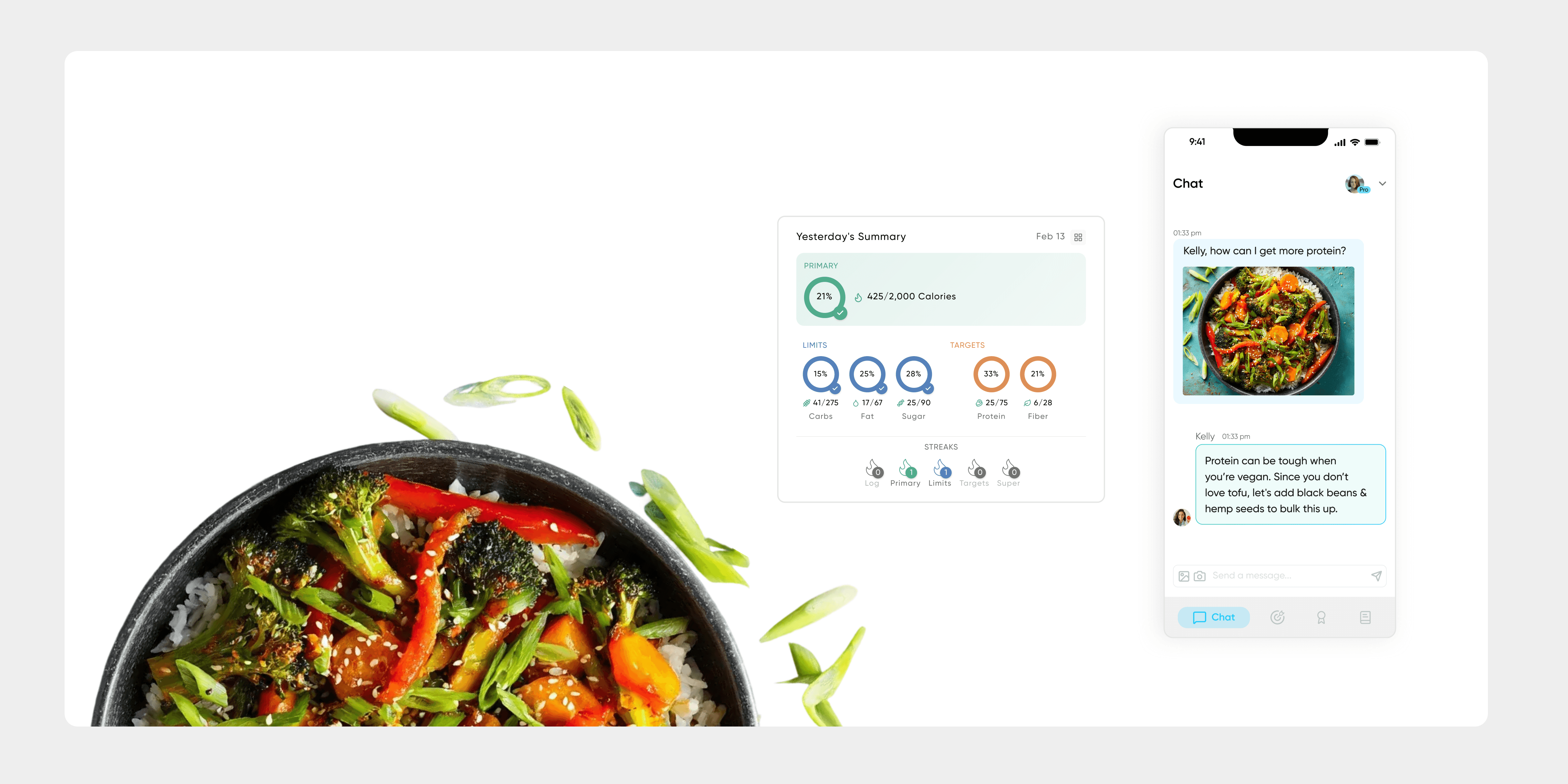
Heliom was building Kelly, an AI-powered health assistant designed to support users with nutrition and long-term wellness habits.
SnapMeal was created as a focused nutrition product that lets users log meals and receive AI-generated feedback in real time. Beyond being a standalone app, SnapMeal served as a live interaction layer for Kelly — a real-world environment where the system could learn from user behavior while delivering immediate value.
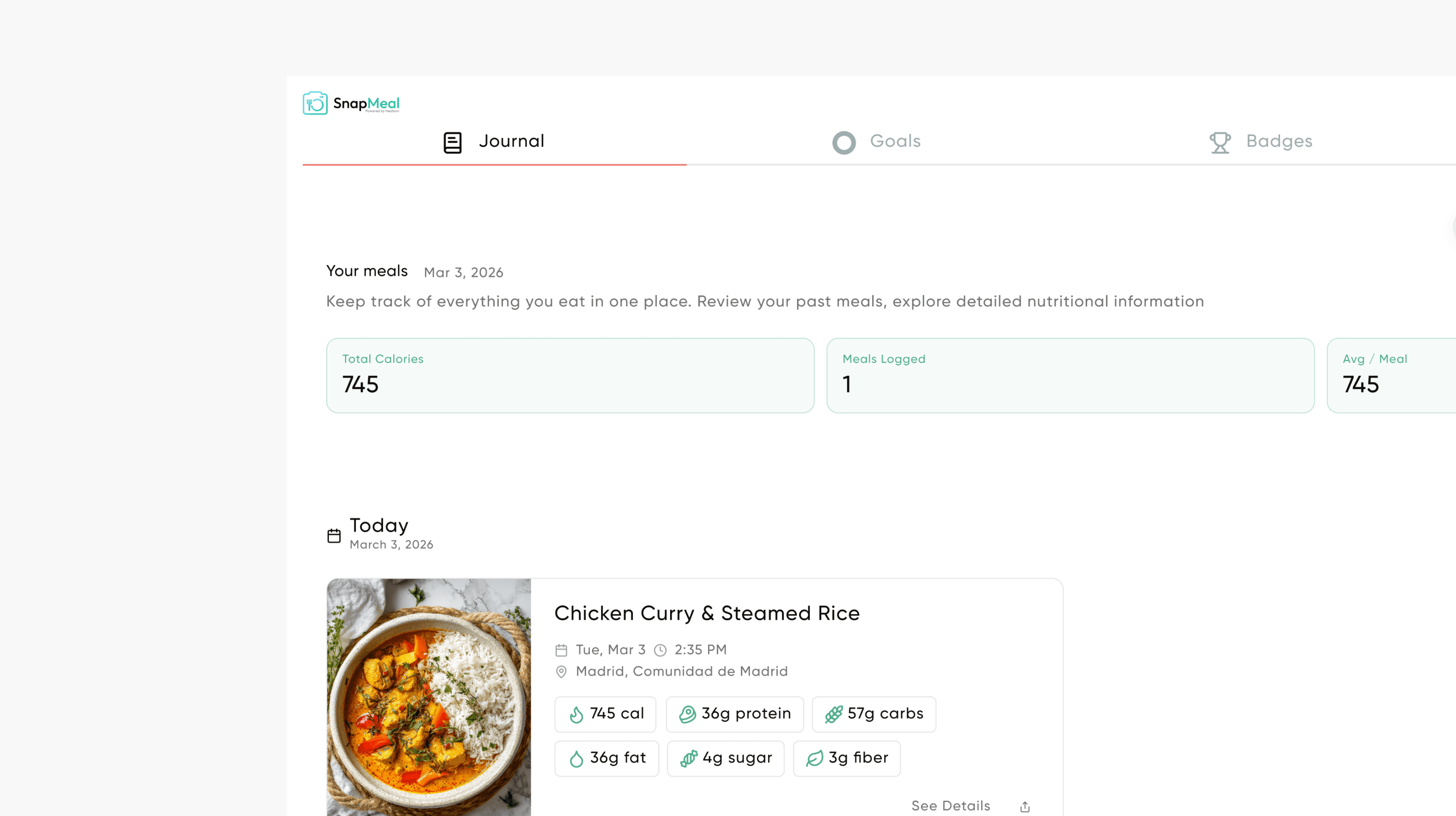
Users could log meals by uploading a photo, writing a description, or interacting directly through chat. Each entry generated structured nutritional output, including calories, protein, carbs, fats, sugar, and fiber.
The product existed across desktop and mobile, requiring consistency in conversational flows, structured outputs, and progress systems across both environments.
Challenge
The structural tension of the product lived at the intersection of variability and measurement.
Generative AI produces non-deterministic outputs. Habit systems demand structured, cumulative data. Users require clarity and trust.
SnapMeal’s experience design had to reconcile these three forces into a coherent, reliable system.
Integrating Probabilistic AI into
Deterministic Systems
Designing how non-deterministic AI interpretations could feed stable nutritional dashboards, goal tracking, and streak logic.
Designing Conversational to
Structured Transitions
Transforming open conversational inputs into structured nutritional entities (calories, macros, fiber, sugar) that could be stored and compared.
Building Trust in AI-Generated
Health Data
Designing clarity around AI-generated outputs so users could confidently act on recommendations without perceiving them as vague or unreliable.
Designing for Variability
and Corrections
Anticipating misinterpretations, edge cases, ambiguous inputs, and user corrections, and designing feedback loops thatpreserved data.
Solution
Onboarding & First Experience
SnapMeal’s onboarding was designed to activate users within the first session.
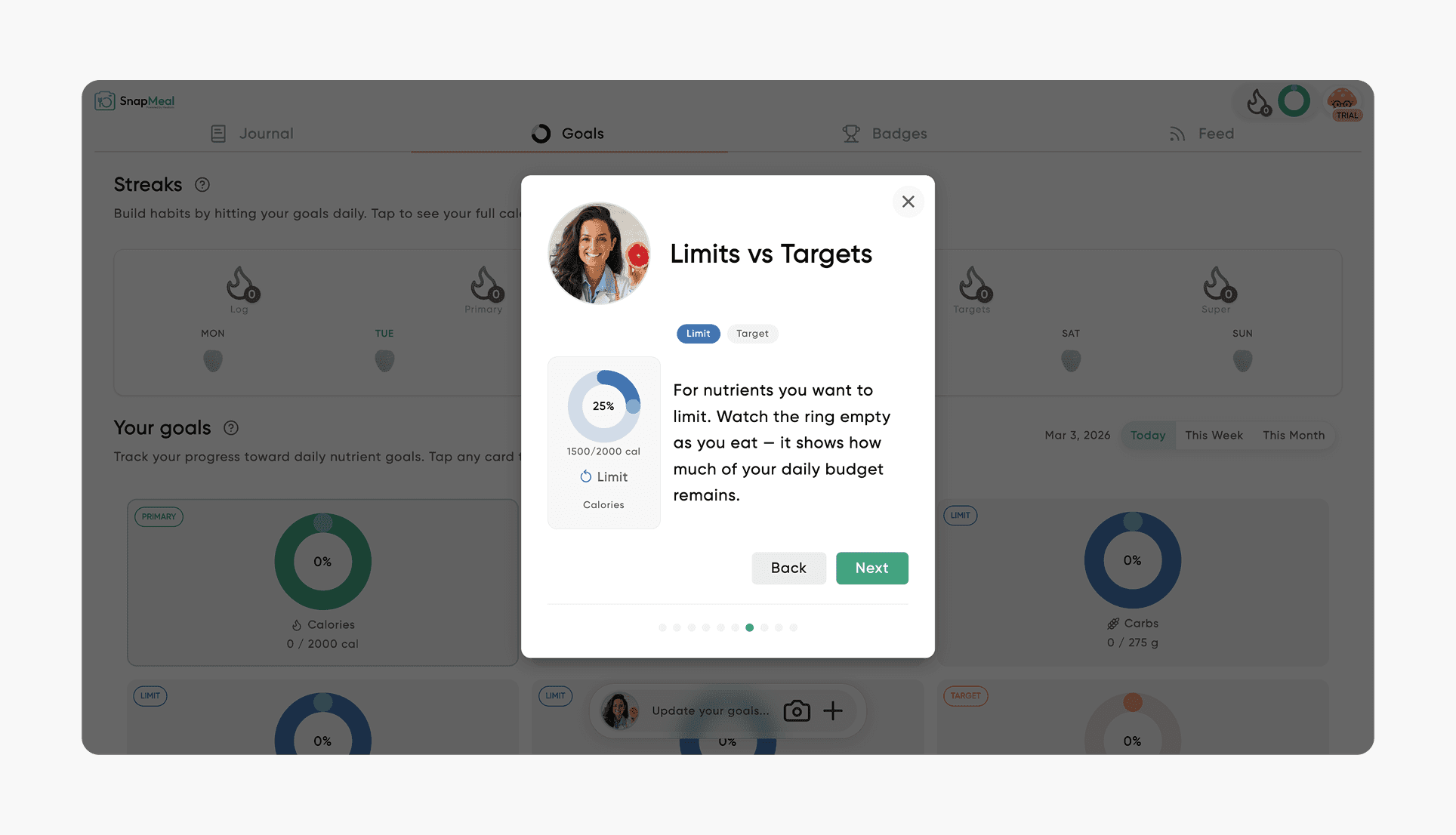
Instead of long setup flows, users met Kelly and were immediately invited to either log a meal or take a short guided tour of the system, introducing Journal, Goals, Badges, and Feed.
Setting goals was emphasized early, since the experience becomes more meaningful once meals are evaluated against clear targets rather than simply recorded.
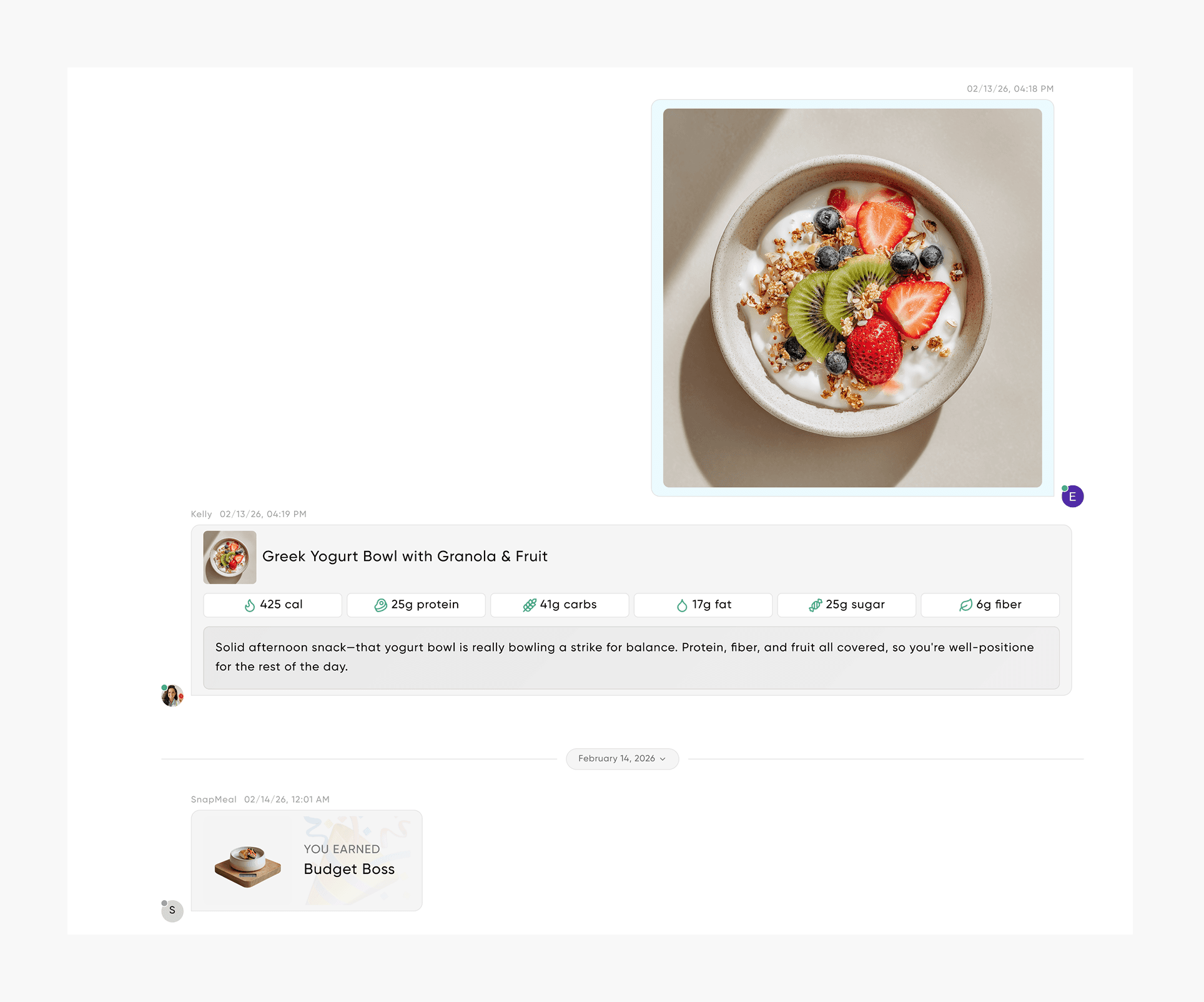
The first meal log triggered the full product loop in minutes: AI interpretation, a structured macro card, goal-aware feedback, and a persistent journal entry.
As soon as that first action was completed, users earned their first badge with a confetti reward, reinforcing the behavior immediately.
Onboarding was not just an introduction to features — it was the first habit-forming moment.
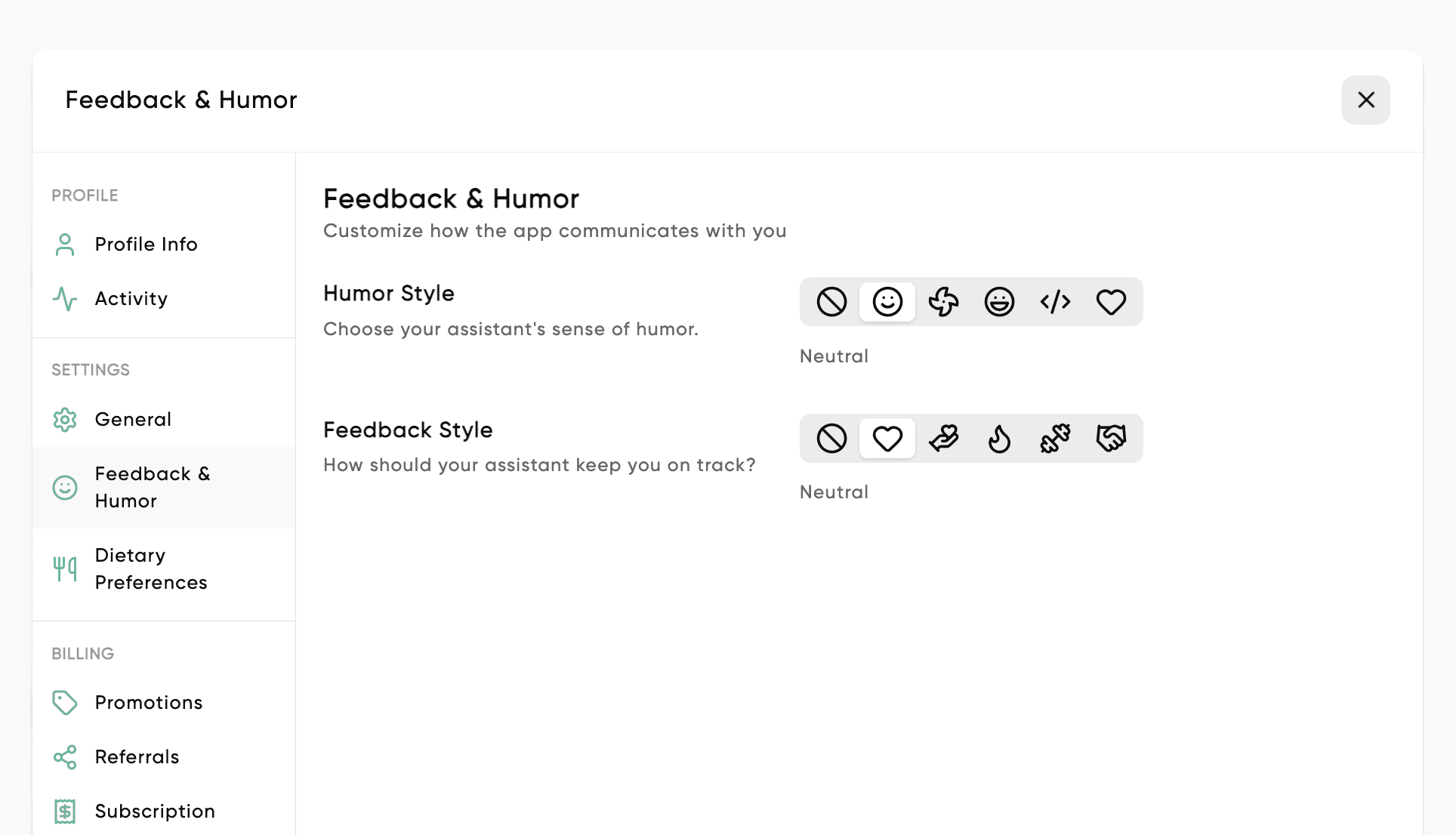
Tone Customization as Behavioral Design
SnapMeal allowed users to choose how Kelly communicated with them — from neutral to more encouraging or playful styles.
This was not a cosmetic feature. The same nutritional insight could be delivered with different emotional framing depending on user preference.
By making tone configurable, the system acknowledged that adherence is influenced not only by data accuracy, but by how feedback feels.
Behavioral guidance became adaptable without compromising structural consistency.
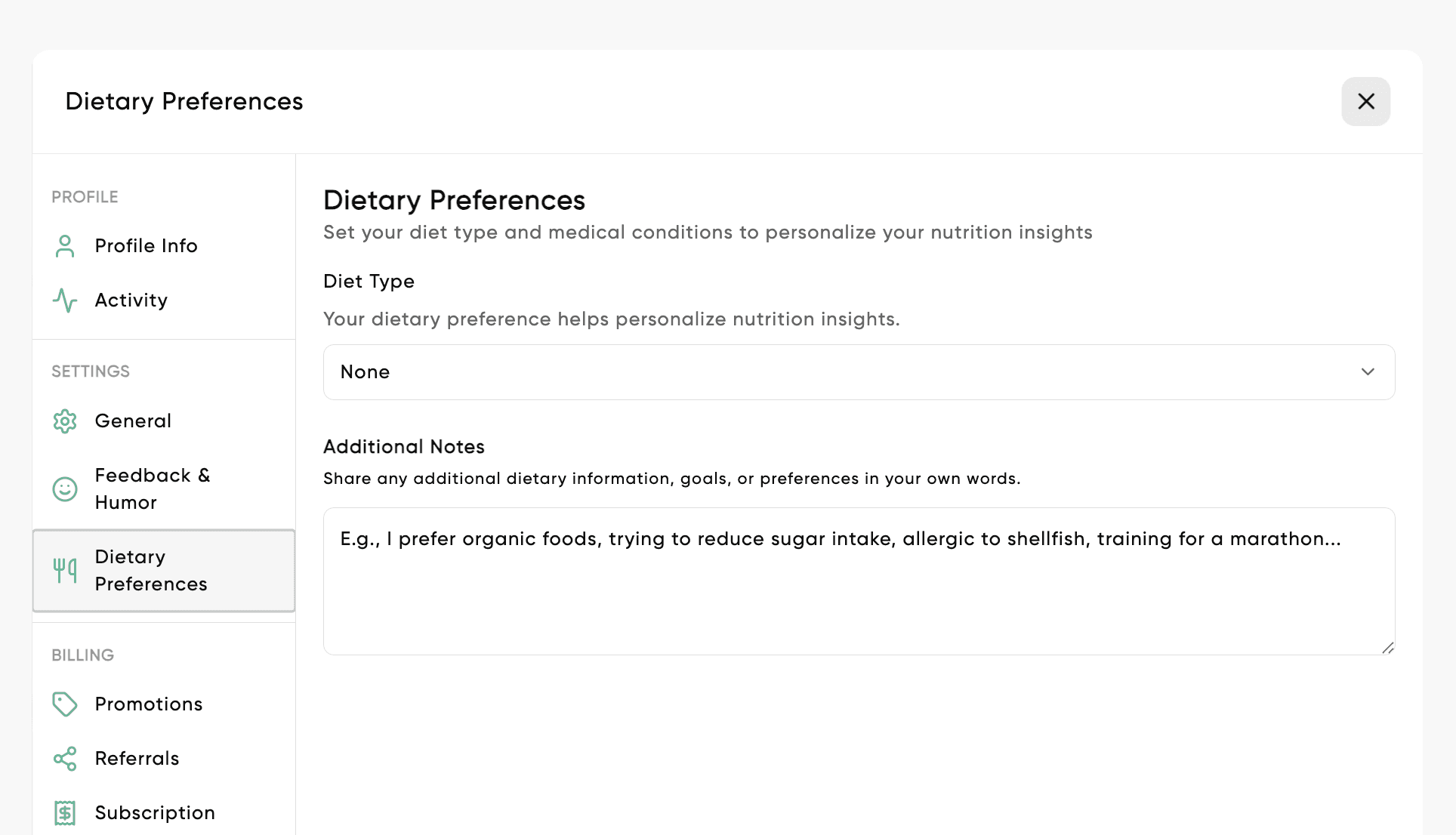
Dietary Preferences & Medical Context
Users could define diet type, medical conditions, and custom nutritional notes. These inputs informed how the AI interpreted meals and framed feedback.
For example, a user aiming to reduce sugar would receive different reinforcement logic than someone prioritizing muscle gain. Dietary constraints acted as guardrails, shaping recommendations within structured boundaries.
This ensured personalization operated inside controlled system logic, not open-ended improvisation.
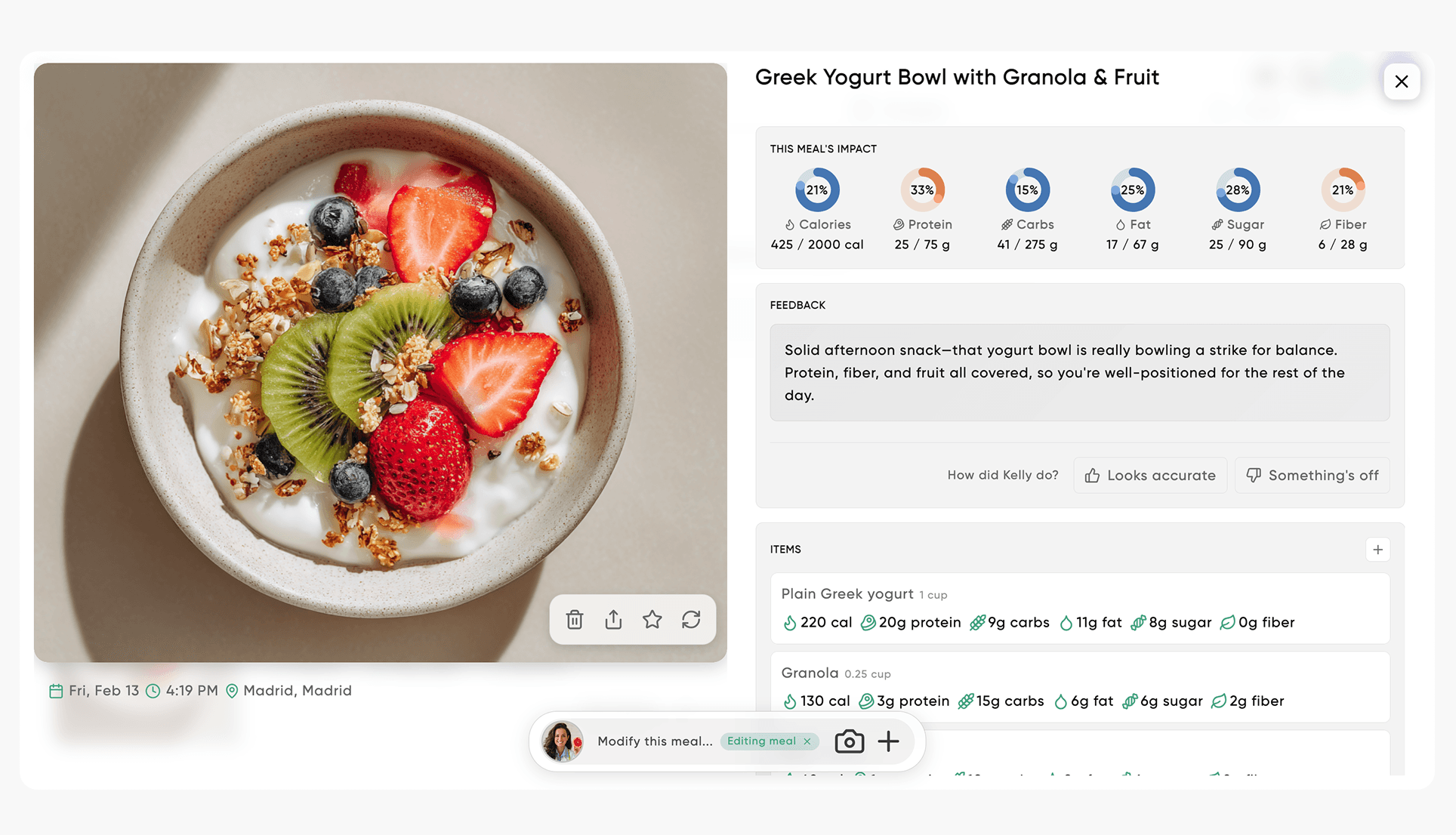
Meal Details & User Control
Each generated meal could be opened in a detailed view where users had full control over the structured data.
From this screen, they could:
Adjust quantities
Modify ingredients
Correct macro values
Update contextual details
This ensured that AI interpretation was never final or opaque.
Instead of enforcing rigid confirmation gates before saving, SnapMeal allowed immediate logging with flexible post-generation edits. The system prioritized speed while preserving data integrity through user control.
Editability became a trust mechanism — giving users ownership over structured data without interrupting conversational flow.
Longitudinal System Memory
SnapMeal did not operate on isolated meals. Each logged entry fed into cumulative structures:
Daily summaries
Goal progress
Limits and targets
Streaks and badges
Kelly’s feedback reflected not only the current meal, but the user’s broader nutritional context for the day.
Over time, the assistant evolved from reactive interpreter to context-aware coach operating within a measurable habit system.
Impact & Conlusions
SnapMeal became more than a meal logging tool. It evolved into a structured AI system that translated open, conversational inputs into measurable, goal-aware behavioral feedback.
Designing this product meant balancing flexibility and control — allowing generative variability in conversation while protecting the integrity of structured nutritional data. The result was an experience where AI felt natural, but the system remained stable, measurable, and habit-driven.